Scrolling Through Heritage: How Barrancos Descendants Are Finding Home in the Digital Age
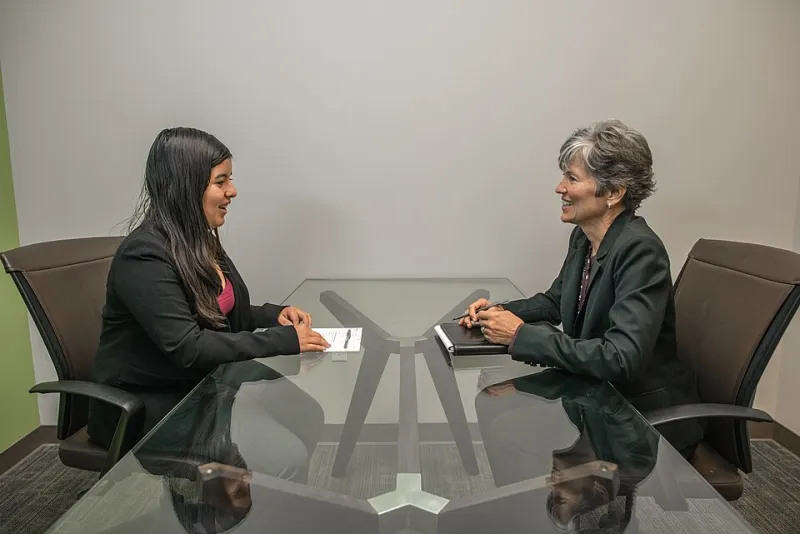
Photo: Amtec Photos, CC BY-SA 2.0, via Wikimedia Commons
For most Americans, social media is a place for recipes, travel photographs, and fleeting moments of humor. For a growing number of Barrancos descendants scattered across cities from Los Angeles to Chicago to Miami, however, platforms like Instagram, TikTok, and Facebook have become something far more consequential: a digital village square where culture is not merely displayed but actively preserved.
The phenomenon is neither accidental nor entirely spontaneous. Over the past several years, a loosely coordinated network of digital storytellers — some formally trained, many entirely self-taught — has emerged from within the Barrancos diaspora community in the United States. Their work is reshaping what cultural heritage preservation looks like in the twenty-first century, and raising important questions about who gets to be the keeper of a community's memory.
A Screen as a Threshold
Elena Vargas, a second-generation Barrancos descendant based in Phoenix, Arizona, began her Instagram account with no particular agenda. She wanted, she explains, to document the dishes her grandmother prepared during Sunday gatherings — not for an audience, but for herself.
"I was terrified of forgetting," she says. "My grandmother was getting older, and I realized I had never written any of it down. So I started filming her hands while she cooked. I started asking questions I should have asked years earlier."
What she did not anticipate was the response. Within weeks of posting her first video — a quiet, seven-minute clip of her grandmother preparing a traditional Barrancos stew while narrating its origins in accented English — her account had drawn followers from across the country. Many identified themselves as Barrancos descendants. Others simply described feeling a profound recognition they could not fully articulate.
"People kept writing to me saying, 'My family made this too,'" Vargas recalls. "Or they'd say, 'I didn't know anyone else remembered this.' That's when I understood what was actually happening. It wasn't just about food. It was about proof. Proof that we existed. Proof that our culture was real."
The Architecture of Online Community
While individual accounts like Vargas's carry significant emotional weight, much of the organized work of digital heritage preservation happens within private and semi-private Facebook groups, where the Barrancos diaspora has constructed something resembling a functioning community infrastructure.
One such group, founded in 2019 by a retired schoolteacher in San Antonio, Texas, now counts more than four thousand members across more than thirty states. The group functions as part archive, part reunion hall, and part cultural classroom. Members share digitized photographs, scanned documents, handwritten recipes, and oral histories recorded on ordinary cell phones. Moderators — volunteers who donate considerable time to the effort — organize content into searchable threads and maintain a growing digital library of community-contributed materials.
"We have documents in that group that don't exist anywhere else," says one of the group's administrators, who asked to be identified only by her first name, Rosario. "Photographs of buildings that no longer stand. Letters written by people whose names never appeared in any official record. When someone shares something like that, it doesn't just belong to their family anymore. It belongs to all of us."
The group has also become a venue for intergenerational exchange, albeit one that sometimes requires deliberate facilitation. Younger members — many of them American-born teenagers and young adults with limited or no Spanish — regularly post questions that older members answer with patience and evident pleasure.
"The kids ask things that might seem basic," Rosario acknowledges, "but they're not basic at all. They're asking because they genuinely want to know. That's not something you can take for granted."
TikTok and the Language of Youth
If Facebook has become the platform of choice for older Barrancos community members, TikTok has emerged as the primary arena where younger diaspora voices are making themselves heard — and doing so in ways that established cultural institutions might struggle to replicate.
Marcus Delgado, a twenty-three-year-old content creator in Atlanta, has amassed a following of more than eighty thousand users through short-form videos that blend humor, personal narrative, and genuine historical content. His approach is deliberately irreverent — he frequently uses trending audio formats and popular editing styles — but the substance beneath the presentation is serious.
"I grew up feeling like my background was invisible," Delgado explains. "I'd go to school and there was nothing about Barrancos. Nothing in the textbooks, nothing in the curriculum. It was like my family came from nowhere. So I started making videos that said: no, we come from somewhere very specific, and here's what that place is."
His most-viewed video, a ninety-second piece tracing his family's migration from Barrancos to the American Southwest over three generations, has been shared more than forty thousand times. The comments section functions as an informal registry of diaspora connections, with viewers from across the country identifying shared surnames, shared towns of origin, and shared experiences of cultural erasure.
"I had a woman in her seventies comment on one of my videos," Delgado says. "She told me she had never talked about Barrancos with her own grandchildren because she didn't think they would care. She said watching my videos made her realize they might care if someone just started the conversation."
Preservation With Limitations
Not everyone within the Barrancos heritage community regards the social media phenomenon with uncomplicated enthusiasm. Scholars and archivists have raised legitimate concerns about the durability and accuracy of digitally circulated materials, noting that platforms can disappear, accounts can be deleted, and information shared without rigorous sourcing can calcify into community mythology.
"There is genuine value in what these digital communities are doing," acknowledges one cultural historian familiar with Barrancos heritage work. "But value and permanence are not the same thing. A Facebook group is not an archive. A TikTok video is not a primary source. The goal should be to use these platforms as on-ramps, not endpoints."
This perspective is not lost on the digital storytellers themselves. Several have begun formal partnerships with libraries, community organizations, and heritage nonprofits to ensure that materials surfaced through social media are transferred into more stable institutional repositories. Vargas, for her part, has donated digitized copies of her grandmother's recipes and recorded interviews to a regional cultural center.
"The platform is where people find each other," she says. "But the work has to go somewhere that will outlast the platform. I think about that a lot."
A Community Reimagined
What social media has accomplished — perhaps more than any other development in recent Barrancos diaspora life — is the creation of a sense of simultaneity. Descendants who live thousands of miles apart can participate in the same conversation, mourn the same losses, celebrate the same milestones, and teach one another the same songs within the same digital moment.
For a community long defined by dispersal, this is not a small thing. It is, in many respects, the closest approximation to collective presence that geography has denied.
"I have cousins I've never met in person," says Delgado. "We found each other through my videos. We talk every week now. That happened because of a phone and an app. But what it created is real."
The platforms will evolve, and the tools will change. What appears to be enduring, however, is the impulse that drives the work: the deeply human need to be known, to be connected, and to pass something forward to those who come next. For the Barrancos diaspora in America, the scroll has become a form of homecoming.