When the Paper Trail Goes Cold: How Barrancos Is Confronting America's Crisis of Institutional Forgetting
There is a particular kind of erasure that does not announce itself. It does not arrive with a decree or a deliberate act of destruction. Instead, it accumulates quietly — in water-damaged storage rooms, in misfiled municipal records, in county offices that never quite got around to digitizing the boxes stacked in their basements. For communities like Barrancos, this slow institutional forgetting has amounted to something far more consequential than administrative inconvenience. It has threatened the very foundation upon which a community proves it existed.
The Barrancos Archives Project, a volunteer-led initiative now entering its fourth year of formal operation, was born from exactly this kind of reckoning. What began as a modest effort to locate and consolidate scattered documentation has since evolved into one of the more instructive models of community-driven record preservation in the American Southwest — and a sobering case study in just how vulnerable marginalized histories remain within the official machinery of American memory.
The Anatomy of an Archive Gap
To understand what the Barrancos Archives Project is working against, it helps to understand the particular ways in which institutional record-keeping has historically failed communities that sit outside the mainstream. Census undercounts, surname anglicization, jurisdictional ambiguities, and the routine destruction of what bureaucracies deemed "non-essential" documents have collectively left enormous gaps in the official record for communities across the country.
For Barrancos, those gaps are not abstract. Vital records from the late nineteenth and early twentieth centuries — birth certificates, land deeds, church registries, school enrollment logs — exist in fragments across multiple repositories, some public, some private, and some effectively inaccessible to the descendants most invested in their contents. County offices have cited storage limitations. State archives have acknowledged backlogs stretching decades. Federal repositories have returned inquiry letters with form responses.
The cumulative effect is a community whose documented presence in American history is, by official measure, far thinner than its actual one. That discrepancy is not incidental. It is the predictable outcome of systems that were never designed with communities like Barrancos in mind.
What Grassroots Preservation Actually Looks Like
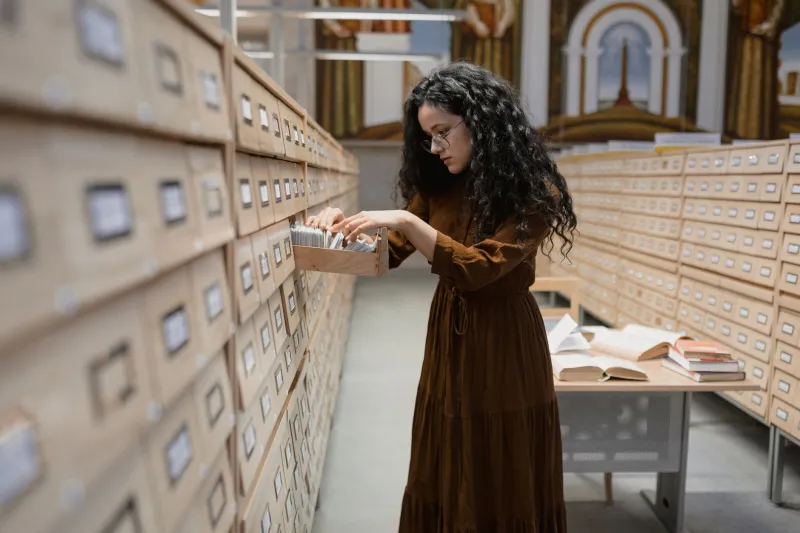
The Archives Project has taken a deliberately pragmatic approach to a problem that could easily become paralyzing. Working with a rotating cohort of trained volunteers, the initiative has prioritized three parallel tracks: locating and photographing at-risk physical documents before further deterioration occurs, building relationships with institutional partners willing to host or co-steward digitized collections, and developing a community-facing database that keeps ownership of the documented record where the project's founders believe it belongs — with the community itself.
That last point carries more weight than it might initially appear to. There is a long and troubled history of outside institutions — universities, museums, government agencies — absorbing community records under the banner of preservation, only for those materials to become effectively inaccessible to the very people whose ancestors filled those pages. The Archives Project has been explicit in its determination to avoid replicating that dynamic.
"Preservation without access is just a different kind of loss," one longtime project coordinator noted during a recent community forum. The remark encapsulates a philosophy that runs throughout the initiative's structure: that a document locked in a climate-controlled archive three states away serves the community no better than one rotting in a garage.
The Broader American Stakes
Barrancos is not unique in facing this problem, and the people behind the Archives Project have never claimed otherwise. What makes their work particularly relevant to a national conversation about memory and belonging is the clarity with which it illustrates the structural conditions that produce historical erasure — and the specific kinds of community capacity required to push back.
Across the United States, similar gaps exist for Indigenous communities whose oral traditions and material records have been systematically devalued by official archival standards, for African American families whose documentation was routinely suppressed or destroyed during and after the era of enslavement, for immigrant communities whose records were lost or altered during naturalization processes, and for rural populations whose geographic distance from institutional centers meant their histories were simply never prioritized.
The common thread is not malice — though malice has certainly played its role at various historical moments. The more persistent force is indifference: the quiet assumption, embedded in institutional practice, that some histories require preservation while others can be allowed to lapse.
The Archives Project's model offers one response to that indifference. By treating documentation as a form of community sovereignty rather than a technical administrative matter, it reframes the question of who is responsible for keeping a history alive. The answer, in Barrancos, has turned out to be: the community, with whatever institutional support it can negotiate, on terms it sets for itself.
Navigating Institutional Partnerships
This is not to suggest that the Archives Project has operated in isolation or viewed all institutional relationships with suspicion. Several partnerships with regional universities and library systems have proven genuinely productive, providing technical expertise in digitization, metadata standards, and long-term storage that would have been difficult for a volunteer organization to develop independently.
What the project has insisted upon, however, is that such partnerships be structured as collaborations rather than transfers. Memoranda of understanding have spelled out community access rights, restrictions on secondary use of materials, and clear protocols for how disputes over interpretation or use would be resolved. These agreements have not always been easy to negotiate. Institutional partners accustomed to standard acquisition frameworks have sometimes found the project's terms unfamiliar. But the resulting relationships have been, by most accounts, more durable and more genuinely useful for having been built on explicit mutual terms.
For other communities navigating similar negotiations, the Barrancos experience suggests that the legal and procedural details of archival partnerships matter enormously — and that the time invested in getting those details right at the outset is rarely wasted.
Memory as Infrastructure
There is a tendency, in conversations about cultural heritage, to treat archival work as a secondary concern — important in an abstract sense, but less urgent than the visible, tangible dimensions of community life. The Barrancos Archives Project challenges that hierarchy directly.
Documented history is not merely a cultural amenity. It is the evidentiary basis for land claims, for federal recognition processes, for the kinds of institutional advocacy that determine whether a community's needs register in political and administrative systems. When records disappear, communities lose not only their stories but their standing.
The volunteers and coordinators who have built the Archives Project understand this. They have treated the recovery and preservation of documentation as infrastructure work — unglamorous, painstaking, and absolutely essential. In doing so, they have produced something that extends well beyond the borders of Barrancos: a replicable framework, a set of hard-won lessons, and a quiet argument that the communities most likely to be forgotten by official history are also the ones most capable of ensuring they are not.