Ground Truth: What Barrancos' Unmarked Burial Sites Are Teaching America About Who Gets Remembered

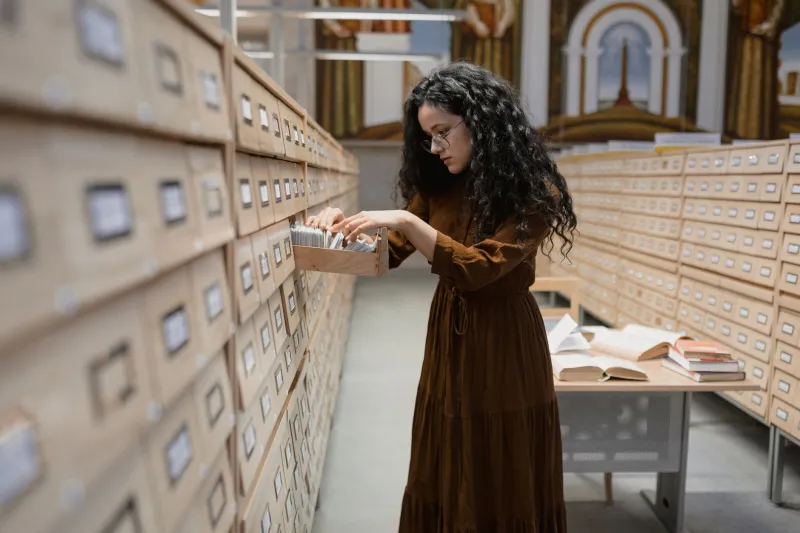
Photo by Photo by Edgar Romero on Unsplash on Unsplash
There is a particular kind of grief that comes not from loss itself, but from the discovery that a loss was never acknowledged in the first place. For many descendants of Barrancos families living across the United States, that grief has arrived quietly — in the form of a blank field in a census record, a missing entry in a county death register, or a stretch of land that local oral history insists is a cemetery but that no official document has ever named as such.
In recent years, a growing coalition of genealogists, historians, archaeologists, and community volunteers has turned its attention to these silences. What they are uncovering in and around Barrancos is not simply a local curiosity. It is a window into one of the most persistent and underexamined failures of American institutional record-keeping: the systematic non-documentation of people whose lives, and deaths, were deemed unworthy of formal acknowledgment.
The Archive as a Political Document
Archives are rarely neutral. Every entry in a death register, every surveyed plot in a municipal cemetery, every probate record filed with a county courthouse reflects a decision — conscious or otherwise — about whose existence merited preservation. For communities that occupied the margins of American civic life, those decisions were often made against them.
Barrancos presents a particularly instructive case. As a community with deep roots predating many of the administrative structures that would eventually govern it, Barrancos existed for generations in a kind of bureaucratic twilight. Its residents paid taxes, raised families, built churches, and buried their dead — but the institutions responsible for recording those facts frequently failed to do so with anything approaching consistency or care.
"The archive tells you as much about the archivist as it does about the subject," says one historian affiliated with a Southwestern university who has spent more than a decade studying land and death records in the Barrancos region. "When you find a gap, you have to ask: was this an accident, or was this a choice?"
Increasingly, the evidence suggests the latter.
What the Ground Reveals
Ground-penetrating radar surveys conducted by a volunteer-led heritage initiative have identified multiple sites in the Barrancos area that show subsurface anomalies consistent with unmarked burials. Some of these sites correspond to locations that appear in handwritten letters, church correspondence, and community oral histories — documents that were never formally indexed and, in many cases, survived only because individual families preserved them across generations.
Others are more difficult to trace. In at least two instances, sites identified through radar surveys have no corresponding documentation whatsoever. No church record. No county register entry. No land survey that acknowledges the presence of a burial ground. The people interred there, if the surveys are confirmed, died without leaving any trace in the official record.
For genealogists working with Barrancos descendants, this is not surprising — but it remains devastating. "I have clients who have been searching for a great-great-grandmother for years," explains a professional genealogist who specializes in Southwestern Hispanic heritage. "We know she existed because her children mentioned her in letters. We know approximately when she died because those same letters reference her passing. But there is no death certificate, no burial record, nothing. She simply disappears from the paper trail."
That disappearance, researchers argue, was not accidental. It reflects a broader pattern in which marginalized communities — including Indigenous peoples, Hispanic residents, and African Americans — were routinely undercounted, misidentified, or simply omitted from the administrative machinery of American civic life.
Forcing a Reckoning in the Archival Profession
The work being done around Barrancos is beginning to reverberate within professional archival circles. Several state and regional archival associations have cited the Barrancos case in recent discussions about what practitioners are calling "structural gaps" — the systematic absences in historical records that result not from the passage of time or the degradation of materials, but from deliberate or negligent exclusion.
The Society of American Archivists has, in recent years, increasingly acknowledged the ethical dimensions of this problem. But acknowledgment and action remain distinct things. Funding for retroactive documentation projects is scarce. The professional infrastructure for identifying and addressing structural gaps is still nascent. And the communities most affected by these gaps — communities like Barrancos — often lack the institutional leverage to compel action from the larger repositories that hold relevant materials.
What they do have, increasingly, is each other.
Community Memory as Counter-Archive
In the absence of official documentation, Barrancos descendants and local heritage advocates have developed what some researchers are beginning to call a "counter-archive" — a body of evidence assembled from oral histories, family photographs, handwritten correspondence, religious records maintained by individual parishes, and the kind of granular local knowledge that no centralized institution ever thought to collect.
This counter-archive is imperfect by design. It reflects the fragmented, improvisational nature of preservation undertaken by communities without resources or institutional support. But it is also, in many respects, more honest than the official record. It does not pretend to completeness. It acknowledges its own gaps. And it carries within it the voices of people who were never given a formal platform to speak.
"When we sit down with an elder and record their memories of where people were buried, where the old markers used to stand before they were removed or deteriorated, we are doing something that the county never did," says a volunteer coordinator with a Barrancos-based heritage preservation group. "We are saying: these people mattered. Their deaths mattered. And we are going to remember them even if no one else did."
The Stakes of Getting This Right
The implications of this work extend well beyond genealogical research. Unmarked burial sites carry significant legal and ethical weight under federal statutes including the Native American Graves Protection and Repatriation Act, and under a growing body of state-level legislation addressing the protection of historic cemeteries. Identifying these sites accurately — and ensuring that they are protected from development, vandalism, or simple neglect — requires precisely the kind of careful, community-informed documentation that heritage organizations in Barrancos are now undertaking.
It also requires honesty about what American institutions got wrong. The gaps in Barrancos' burial records are not anomalies. They are symptoms of a broader failure — one that played out in counties and parishes and townships across the country, wherever marginalized communities were present and official indifference was permitted to stand unchallenged.
Recognizing that failure is not an act of condemnation. It is a precondition for repair. And in Barrancos, the work of repair is already underway — one unmarked grave, one recovered name, one recorded memory at a time.
Barrancos Heritage is committed to supporting community-led documentation and preservation efforts. If you have family records, oral histories, or knowledge of burial sites in the Barrancos region, we encourage you to contact our community archive initiative.