Citizens With Clipboards: How Barrancos Descendants Are Holding America's Historical Record to Account
For most Americans, the phrase "historical fact" carries an implicit guarantee — a suggestion that what appears in a published monograph, a university archive, or a federally maintained database has been verified, cross-referenced, and declared reliable by credentialed experts. For Barrancos community members who have spent years examining those same records, the phrase carries a different weight entirely.
What they have found, through painstaking and largely volunteer-driven research, is a body of documentation riddled with errors of omission, chronological distortions, and in some cases language that appears to have been deliberately chosen to minimize or erase Barrancos' presence in the American historical landscape. Their findings are not anecdotal. They are catalogued, annotated, and increasingly difficult for institutions to dismiss.
The Work Behind the Work
The effort to systematically audit American historical records for Barrancos-related inaccuracies did not begin as an organized movement. It emerged organically from the frustrations of individuals who kept encountering the same problem: documents that described their community's past in ways that contradicted what their own families remembered, what their elders had passed down, and what physical evidence in the landscape still suggested.
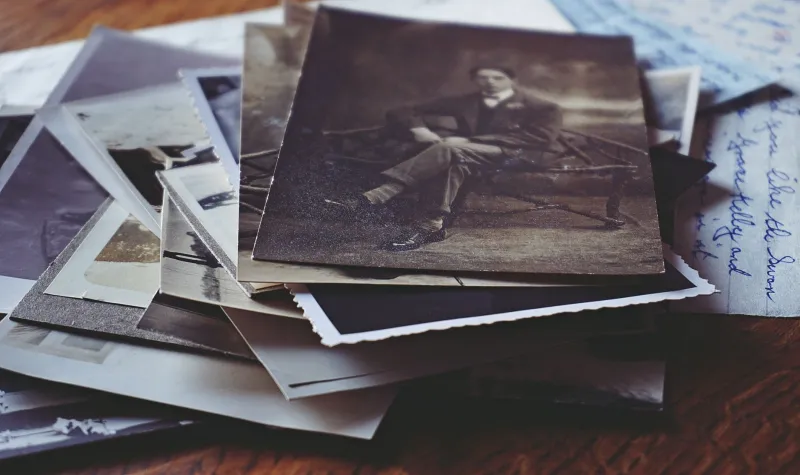
Margarita Fuentes, a retired schoolteacher from New Mexico who has been researching her Barrancos lineage for nearly two decades, describes the experience as discovering that a photograph of your own home has been mislabeled as belonging to someone else. "You know what you're looking at," she says. "You know what's wrong. But the caption says otherwise, and the caption has been published in a book, and the book is in a library, and so suddenly your own memory is the thing that needs defending."
Fuentes is among a growing number of community members who have moved beyond personal genealogical research into something closer to investigative scholarship. Working alongside a loose network of Barrancos descendants, she has spent years cross-referencing census documents, land grant records, church registries, and military service files — comparing what those primary sources actually contain against how they have been characterized in secondary literature.
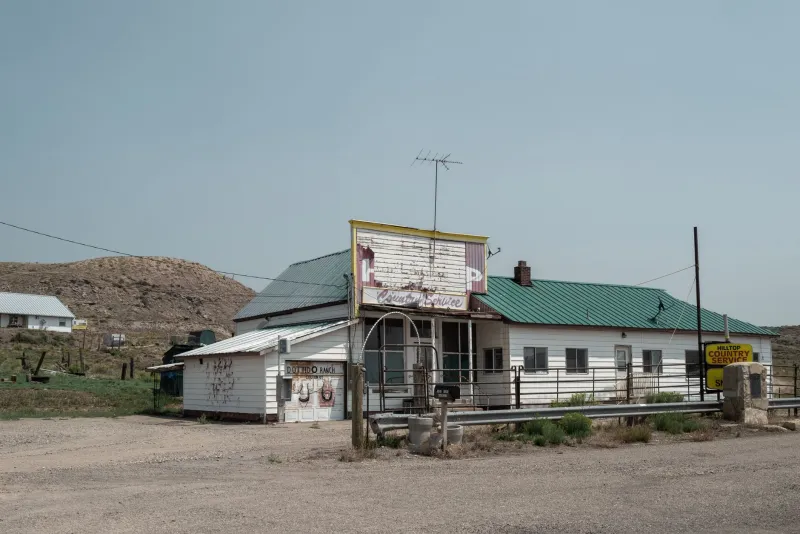
The discrepancies she and her collaborators have documented range from minor transcription errors to substantive misrepresentations. In one case, a widely cited regional history described a Barrancos settlement as having been "abandoned" in the early twentieth century — a characterization that, according to contemporaneous documents the group located, was flatly inaccurate. The settlement had not been abandoned. Its residents had been displaced.
The Methodology of Memory
What distinguishes this community-led verification effort from simple disagreement with published accounts is its commitment to documentation. The network of researchers operating under what some have informally begun calling the Barrancos Historical Accuracy Project maintains a shared database of flagged claims, each linked to the original published source and accompanied by the primary documents that contradict or complicate it.
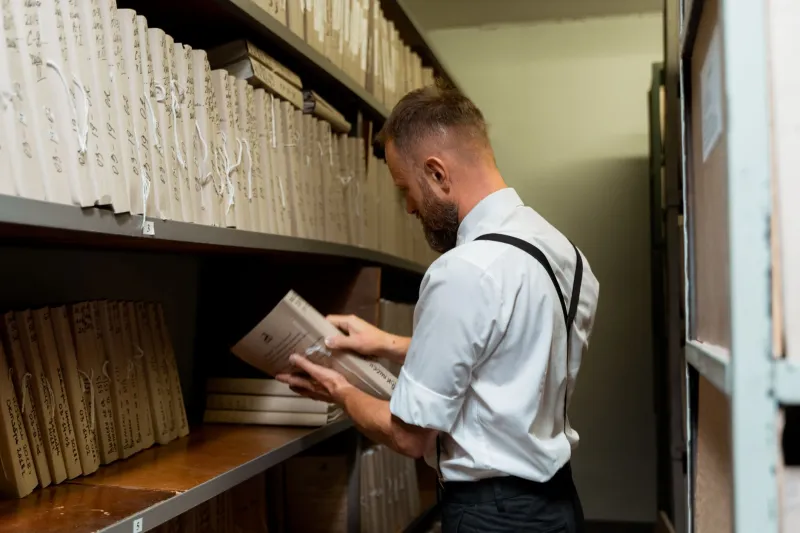
The project does not operate with institutional backing or formal funding. Its members are retired teachers, working parents, graduate students, and tradespeople who carve time for this work around the margins of their daily lives. Some conduct research remotely, accessing digitized archives through university library portals. Others travel in person to county courthouses, state archives, and private collections that have not yet been digitized.
Rodrigo Castillo, a software engineer by profession who grew up hearing Barrancos stories from his grandmother, has applied his professional skill set to the project's digital infrastructure. He describes the database not as an adversarial tool but as a corrective one. "We're not trying to cancel anyone's scholarship," he says. "We're trying to make the scholarship more accurate. That should be something everyone wants."
The project has also developed a protocol for approaching institutions with its findings — a deliberate choice to pursue dialogue before public disclosure. Several archival institutions have responded constructively, issuing corrections to finding aids or adding contextual notes to digitized documents. Others have not responded at all.
When Citizen Research Meets Academic Resistance
The reception of community-generated historical research within academic circles remains uneven. Some scholars have welcomed the project's findings, acknowledging that community knowledge constitutes a legitimate form of historical evidence that credentialed researchers have too often overlooked. Others have been less receptive, raising methodological objections that critics argue function more as gatekeeping than genuine scholarly scrutiny.
The tension is not unique to Barrancos. Across the United States, descendants of marginalized and underrepresented communities have increasingly challenged the monopoly that formal institutions have long held over historical interpretation. What distinguishes the Barrancos effort is the rigor with which it has engaged the documentary record on the record's own terms — not rejecting archival evidence, but insisting that it be read completely and honestly.
Dr. Alicia Moreno, a historian at a southwestern university who has consulted informally with the project, argues that the community's approach represents a model worth taking seriously. "These researchers are not operating outside the evidentiary framework of the discipline," she says. "They are operating inside it, and they are finding things that the discipline missed. That is precisely how historical knowledge is supposed to advance."
What Accurate History Costs — and Who Pays
The implications of the project's work extend beyond Barrancos. If community members without institutional credentials can identify substantive inaccuracies in published histories using publicly accessible primary sources, it raises an uncomfortable question about how many other communities have been similarly misrepresented — and how many of those misrepresentations remain unchallenged simply because no one with sufficient motivation has yet looked.
For Barrancos Heritage, the citizen audit movement represents something more than a correction exercise. It is an assertion that communities have not only the right but the capacity to participate in the construction of their own historical record — and that their participation produces better history, not merely more contested history.
Fuentes puts it plainly. "We are not asking to replace the archive," she says. "We are asking the archive to be complete. That is not a radical demand. It is the minimum that history owes everyone."
The work continues. The database grows. And with each flagged claim and each recovered document, the historical record of Barrancos becomes incrementally more accurate — not because an institution decided it should, but because a community decided it would.