Follow the Money, Find the Gate: How Funding Rules Quietly Exclude Small Heritage Communities
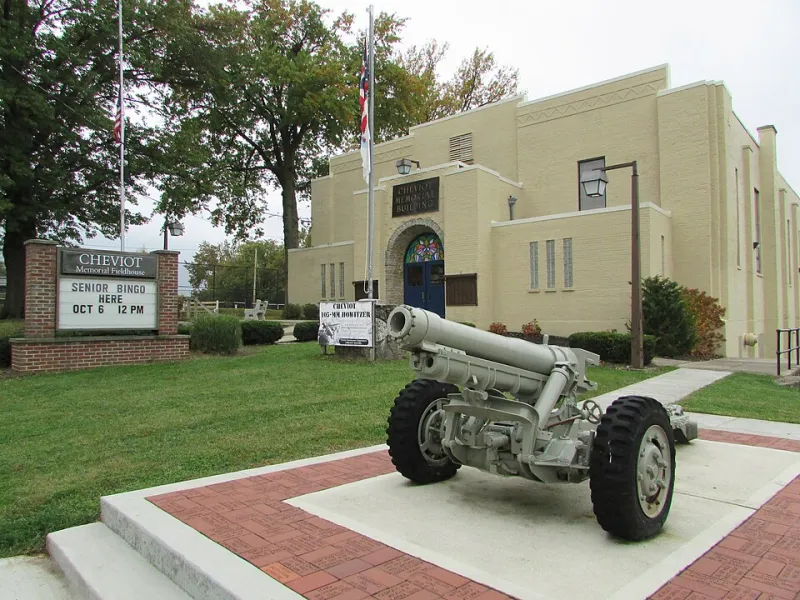
Photo: sophia elchynski, CC BY-SA 4.0, via Wikimedia Commons
Here is a number that should trouble anyone who cares about American heritage: studies of state preservation funding consistently show that the majority of competitive grants are won by organizations with professional staff, while volunteer-run groups — the ones holding up the history in small towns — win a fraction of awards and dollars. Barrancos knows this arithmetic intimately. We have lost count of the grant cycles we have entered and lost, not because our projects were weak, but because the application process was built for someone else.
The Gatekeeper Problem, Explained Honestly
We spoke with grant officers at three state heritage programs and one national foundation, all of whom spoke on condition of anonymity. Their candor was refreshing and, at times, deflating.
"We rank applications partly on 'organizational capacity,'" one officer admitted. "Which usually means: do you have a paid director, an audited financial statement, and a grant writer? A community with none of those will score poorly even if its project is the most important thing we read all year."
Another pointed to matching requirements. Many preservation grants require the applicant to raise matching funds — often dollar for dollar. For a large institution, that is an inconvenience. For a volunteer group in a small town, it can be an impossible wall.
Then there is the language itself. Applications routinely ask for "measurable outcomes," "cultural asset inventories," and "sustainability plans." These are not neutral terms; they are the vocabulary of professionalized nonprofits. Communities whose knowledge is oral rather than documented struggle to describe their own heritage in a dialect the scoring rubric recognizes.
The result is a quiet, structural form of exclusion — no malice required. The rules simply assume resources that small communities do not have, and the money flows accordingly.
The Barrancos Playbook: Competing Without the Staff
We have lost enough rounds to learn something worth sharing. Here is what actually worked for us.
One: Apply for the small grants first. Micro-grants of $2,500 to $10,000 attract less competition and have shorter applications. A stack of small wins builds the track record that large applications demand.
Two: Borrow institutional legitimacy. Partner with a university, a county historical commission, or a regional nonprofit willing to serve as fiscal sponsor. Their audited books become your audited books.
Three: Translate your knowledge into their vocabulary. Our oral histories became an "intangible cultural asset inventory." Our recipe cards became a "community documentation project." Nothing about the work changed — only the description.
Four: Make the match achievable. Count volunteer hours. Many programs allow in-kind contributions to satisfy matching requirements, and documented volunteer labor can be valued at more than thirty dollars an hour under federal guidelines.
Five: Call the officer before you apply. Every officer we interviewed said the same thing: applicants who schedule a call consistently write stronger applications. Ask what gets funded. Ask what gets rejected. Then write accordingly.
Six: Reapply. Losing is data. One state program offers written reviewer comments on request. We requested ours, revised, and won on the third attempt.
Why This Fight Matters Beyond Barrancos
Some will say the market has spoken — that funding should follow institutional capacity. We reject that framing. Heritage is not a commodity that scales; it is a birthright that lives in specific places and specific families. When funding rules favor the large and the credentialed, they decide, in effect, which histories deserve to survive. That is not a neutral outcome. That is a choice, and it can be unmade.
Until it is, communities like ours will keep writing the applications, calling the officers, and counting our volunteer hours at thirty dollars a pop. We have preserved harder things than paperwork.