Paved Over and Powered Down: The Systematic Infrastructure Denial That Kept Barrancos Invisible
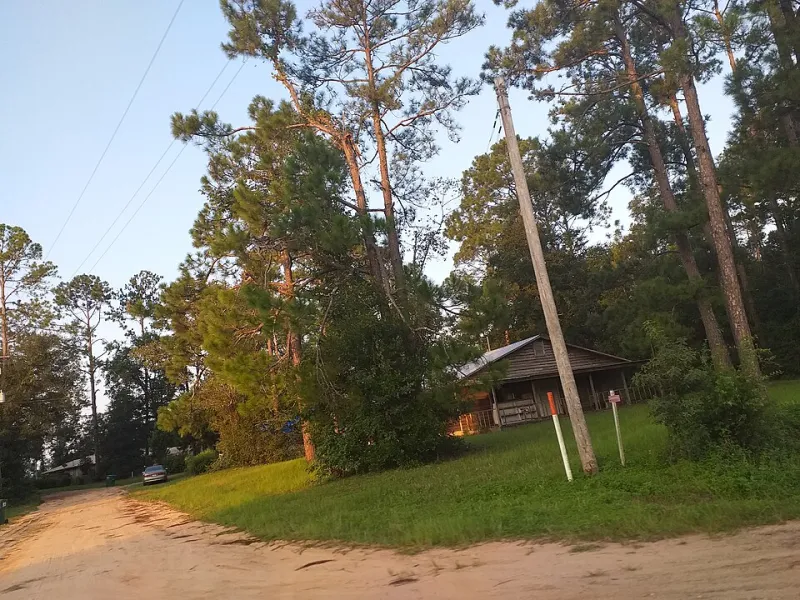
Photo: Hastengeims, CC BY-SA 4.0, via Wikimedia Commons
There is a particular kind of erasure that does not require a pen or a cartographer's deliberate omission. It requires only a budget committee's indifference, a county engineer's deferred maintenance schedule, and the quiet accumulation of decades in which a community's most basic physical needs are treated as someone else's problem. For Barrancos, that erasure has been written not in ink but in crumbling road surfaces, absent power lines, and the absence of a reliable postal address.
What emerges from a close examination of municipal budget allocations, state infrastructure reports, and the living testimony of Barrancos residents is a portrait of neglect so consistent across generations that it can no longer be attributed to oversight. It is, by any reasonable measure, a pattern—and patterns, unlike accidents, carry intent.
Roads That Lead Nowhere and Utilities That Never Arrived
The most immediate evidence of Barrancos' infrastructural marginalization is physical and unavoidable. County road maintenance records, reviewed across a span of several decades, show persistent gaps in paving and grading schedules that align with the boundaries of the Barrancos community with uncomfortable precision. Roads serving comparable rural populations in neighboring areas received routine attention; Barrancos roads did not. The result is a network of thoroughfares that, in wet seasons, become impassable and, in dry ones, deteriorate steadily without remedy.
Utility access tells a similar story. While rural electrification programs expanded aggressively across much of the American Southwest during the mid-twentieth century, documentation obtained from regional utility authorities indicates that Barrancos sat at the edge of service maps—sometimes literally drawn just outside coverage boundaries—for years after surrounding communities were connected. Residents who pursued connection were often quoted prohibitive extension fees that neighboring communities had not been required to absorb.
This is not a matter of geography alone. The terrain is no more challenging here than in dozens of communities that received infrastructure investment without delay. What differed was the community itself.
The Postal Problem and What It Means to Not Officially Exist
Perhaps no single infrastructure failure communicates the consequences of institutional indifference more clearly than the decades-long ambiguity surrounding Barrancos' postal designation. Without a stable, recognized mailing address, residents faced compounding difficulties: the inability to receive government correspondence reliably, challenges establishing credit or official identity, and a persistent barrier to accessing federal assistance programs that require verifiable addresses for enrollment.
Community accounts collected by Barrancos Heritage document residents who missed benefit notifications, lost legal correspondence, and were turned away from services because their address could not be confirmed in official databases. For a community already navigating cultural and historical marginalization, the absence of something as elementary as a reliable ZIP code carried consequences that extended far beyond inconvenience.
Postal service coverage maps from the latter half of the twentieth century place Barrancos in a jurisdictional gray zone that was revisited repeatedly at the administrative level but resolved inconsistently. The community appears in some records, vanishes in others, and resurfaces under different designations—a bureaucratic instability that mirrors, in miniature, the cartographic invisibility that has characterized Barrancos' relationship with official American geography.
Broadband as the New Frontier of Exclusion
If roads and utilities represent the infrastructure failures of the twentieth century, broadband access has become the defining infrastructure failure of the twenty-first. Federal connectivity initiatives launched over the past two decades, including programs specifically targeting underserved rural communities, have reached many of Barrancos' geographic neighbors while leaving the community itself in a persistent coverage gap.
The implications are not abstract. In an era when healthcare access, educational resources, economic opportunity, and civic participation have migrated substantially online, broadband exclusion functions as a comprehensive barrier. Students attempting remote learning during recent years of disrupted schooling faced disadvantages their peers in connected communities did not. Small businesses and artisans attempting to market traditional crafts and cultural goods could not reliably access the platforms through which such commerce now operates. Residents seeking to participate in heritage organizations—including those dedicated to preserving and amplifying Barrancos' own cultural legacy—encountered connectivity obstacles that their counterparts elsewhere did not.
Federal broadband mapping data, which has itself been the subject of considerable scrutiny for its inaccuracies, has at various points classified portions of the Barrancos area as adequately served based on provider self-reporting that does not reflect ground-level reality. This mapping error is not unique to Barrancos, but its consequences here are compounded by the community's existing isolation.
The Cumulative Architecture of Neglect
Considered individually, each of these infrastructure gaps might be explained away—budget constraints, geographic challenges, administrative complexity. Considered together, across decades and across multiple systems simultaneously, they constitute what scholars of spatial inequality have begun to call an architecture of absence: the deliberate or functionally deliberate construction of conditions that limit a community's integration into broader American life.
This architecture is not maintained through dramatic acts of exclusion. It is maintained through inaction, through the repeated choice to defer, underfund, and deprioritize. It is maintained through the bureaucratic tendency to classify communities like Barrancos as edge cases rather than constituents with legitimate claims on public resources.
The physical consequences—deteriorated roads, unreliable utilities, spotty mail service, absent broadband—are real and measurable. But the deeper consequence is symbolic and cultural. When a community cannot move freely, cannot communicate reliably, cannot connect to the systems through which American civic and economic life is conducted, it receives a message about its standing that no official document needs to articulate. The infrastructure itself delivers the verdict.
What Accountability Looks Like From Here
For Barrancos Heritage and the broader community it serves, documenting this history is not merely an exercise in grievance. It is a prerequisite for accountability. Budget records do not lie, even when the agencies that produced them would prefer their implications go unexamined. Infrastructure maps carry within them the evidence of choices made and choices deferred. Community testimony, gathered carefully and preserved rigorously, transforms individual experience into collective record.
Advocates working on behalf of the community have, in recent years, begun compiling precisely this kind of evidentiary record—cross-referencing government documents with resident accounts and mapping the gaps not just geographically but historically. The goal is not only to name what has occurred but to establish the foundation for the remediation that is long overdue.
America has a well-documented history of treating certain communities as inconveniences to be managed rather than constituents to be served. Barrancos is not unique in this regard, but its story is specific, documented, and available for anyone willing to look. The roads that were never paved, the lines that were never run, the addresses that were never assigned—these are not footnotes. They are the record. And the record, once assembled, demands a response.