Loud Joy, Durable Memory: In Defense of Celebration as Heritage's Most Radical Strategy
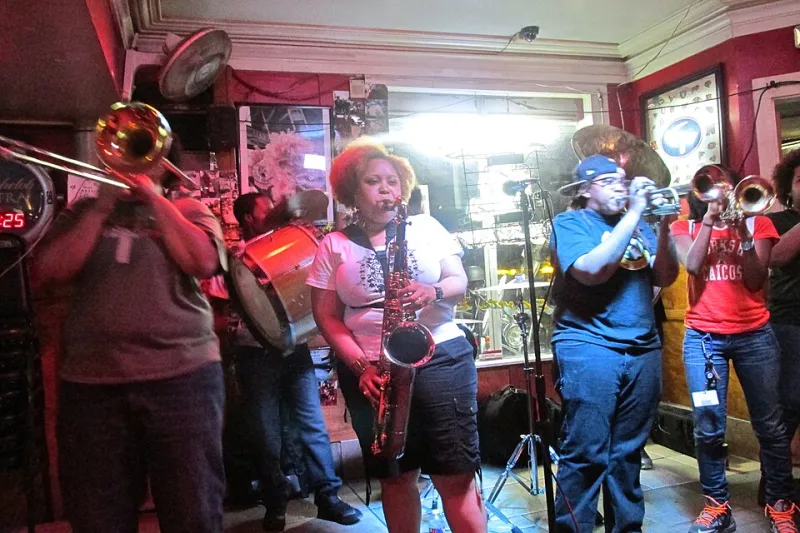
Photo: Kyledecoste, CC BY-SA 4.0, via Wikimedia Commons
There is a familiar script that heritage communities follow when they find themselves overlooked. Form a committee. Draft a petition. Testify before a historical commission. Write letters to state legislators. Wait. This is the machinery of formal recognition, and it is important machinery. But after watching Barrancos' story unfold over decades, we would offer a heretical observation: the community's most durable act of preservation was none of these things. It was a festival.
The Limits of Polite Petition
Bureaucratic recognition is, by design, slow and conditional. A historical marker can be removed. A grant can lapse. An archive can be quietly deaccessioned. Any community whose survival depends on institutional approval is, by definition, dependent on institutions that have historically been indifferent to it.
Barrancos spent generations waiting on that approval and receiving silence. The turning point came when the community stopped treating celebration as a reward for recognition and began treating it as the recognition itself.
What Celebration Builds That Litigation Cannot
Consider what an annual heritage festival actually constructs. It creates a recurring physical gathering — a demonstrated, documented fact of continued community existence. It generates its own archive: recordings, photographs, oral histories collected on-site. It recruits the young, who are unlikely to attend a zoning hearing but will come for music and food. It attracts press. It makes the community legible to outsiders without requiring outsiders' permission.
Most critically, celebration is self-fueling. A lawsuit ends with a verdict; a festival ends with a date on next year's calendar. One produces a ruling; the other produces a tradition. Traditions are far harder to erase.
The Preservation of Place
This is not merely an abstract argument — it has concrete consequences for the built environment, the domain this publication watches most closely. Communities that gather visibly tend to defend their buildings visibly. The church, the dance hall, the family cemetery: these structures survive when a living community has a reason — and a date — to return to them. An annual homecoming is, functionally, a preservation easement written in memory rather than law.
Heritage architecture without people is a museum. Heritage architecture surrounded by an annual crowd is a living place, and living places are what preservation law and philanthropy respond to, however belatedly.
An Era of Heritage Anxiety
We live in a moment of genuine anxiety about cultural memory — concerns about archives underfunded, textbooks revised, neighborhoods renamed. The instinct is to fight: to lobby, to litigate, to petition. Fine. But Barrancos suggests the deeper strategy lies elsewhere. Communities that only ask to be remembered are negotiating. Communities that gather, sing, cook, and dance in public are asserting — loudly, joyfully, and annually — that they were never gone.
The band that wouldn't stop playing was not avoiding the fight. It was winning it. Any community anxious about its own erasure would do well to take up an instrument.