Small Towns, Big Lessons: Why Marginalized Communities Like Barrancos Are Rewriting the Rules of Civic Power
Photo: Michal Klajban, CC BY-SA 4.0, via Wikimedia Commons
For generations, communities like Barrancos have been treated as footnotes — places too small, too peripheral, and too easily overlooked to merit sustained attention from the institutions that shape American public life. Historians passed them by. Cartographers left them off. Bureaucrats filed their records under categories that rendered them invisible. And yet, something remarkable has emerged from that sustained invisibility: a body of civic knowledge so practical, so hard-won, and so transferable that organizers and scholars across the country are now studying it with genuine urgency.
The argument is not sentimental. It is strategic. Communities that have spent decades — in some cases, centuries — fighting for recognition have developed skills that more visible, better-resourced groups simply never needed to acquire. They have learned how to document without institutional support, organize without formal infrastructure, and sustain cultural identity without the validation of mainstream recognition. In short, they have learned how to persist. And persistence, it turns out, is the foundational competency of effective civic engagement.
The Mechanics of Invisible Resistance
What does resistance look like when no one is watching? In the case of Barrancos descendants across the United States, it has taken many forms: kitchen-table genealogy projects, handwritten family histories passed between cousins, informal networks of mutual aid that predate any nonprofit designation. None of these efforts made headlines. Most of them were never intended to.
But that is precisely what makes them instructive. Civic engagement theory has long privileged visible action — the march, the vote, the public comment period. What the Barrancos model reveals is that the most durable forms of community power are often invisible to outside observers. They operate through trust rather than publicity, through relationship rather than institution. They are, in the language of contemporary organizing, deeply relational — and that relational density is what allows them to survive periods of official hostility or neglect.
This insight has direct applications for any community seeking to challenge systemic invisibility. Whether the issue is environmental justice, linguistic preservation, or historical recognition, the first step is not a press release. It is the patient construction of internal coherence: shared narrative, shared memory, shared purpose. Barrancos communities did not wait for external validation to begin that work. They simply began.
Accountability Without Access
One of the most striking lessons embedded in the Barrancos story is the capacity to hold institutions accountable without having formal access to those institutions. Traditional accountability mechanisms — litigation, legislation, media pressure — require resources that marginalized communities rarely possess in abundance. Barrancos descendants, like many small and overlooked communities, have had to develop alternative approaches.
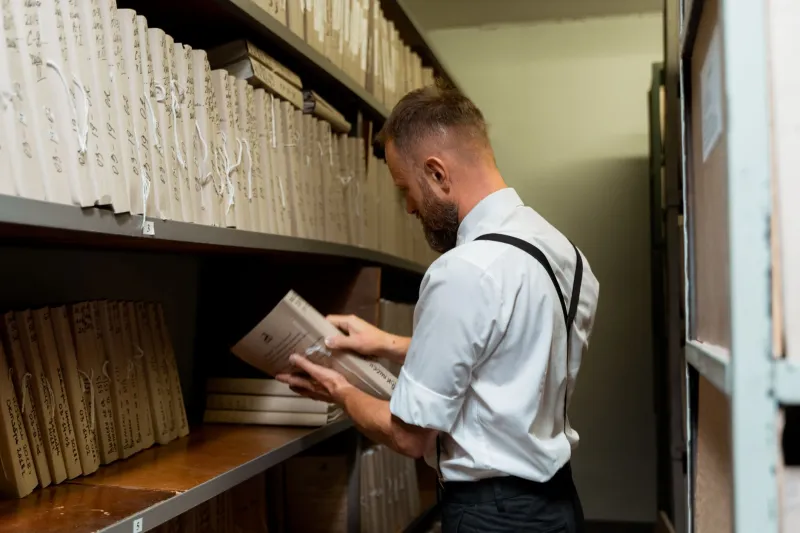
Chief among these is what might be called the practice of persistent documentation. When official records fail to capture a community's existence, members of that community become their own archivists. They preserve birth certificates in plastic sleeves, photograph crumbling headstones, record elders before their voices are lost. Over time, this distributed archive becomes a form of civic leverage. It is evidence. It is testimony. It is the raw material from which historical claims are constructed and, eventually, recognized.
The broader lesson here is that institutional accountability does not always require confrontation. Sometimes it requires simply outlasting institutional indifference — being present, documented, and organized when the moment for recognition finally arrives. Barrancos communities have demonstrated that this form of patient, evidence-based persistence is not passive. It is a sophisticated civic strategy.
Organizing Across Distance
One of the structural challenges facing any diaspora community is geographic dispersal. Barrancos descendants are not concentrated in a single city or region. They are spread across the American landscape, separated by distance, generation, and varying degrees of cultural connection. The organizational challenge this presents would be daunting for any well-funded nonprofit. For a community operating largely without institutional support, it might seem insurmountable.
And yet, Barrancos communities have developed remarkably effective models for maintaining cohesion across distance. Annual gatherings, digital archives, shared newsletters, and increasingly, social media communities have all served as connective tissue. What is notable about these mechanisms is not their novelty — many communities use similar tools — but the intentionality with which they have been deployed. Every reunion, every shared document, every online discussion thread is understood as an act of cultural maintenance, not merely social convenience.
For organizers working in other dispersed communities — immigrant networks, rural communities facing depopulation, Indigenous groups whose members have relocated to urban centers — this intentionality offers a transferable model. The infrastructure of connection does not build itself. It requires deliberate investment, and the Barrancos experience suggests that even modest investments, made consistently over time, can sustain remarkable degrees of communal cohesion.
The Institutional Reckoning
Perhaps the most consequential lesson of the Barrancos model is its implications for American institutions themselves. Museums, universities, libraries, and government agencies have, in recent years, begun to grapple seriously with the question of whose history they have been preserving — and whose they have systematically excluded. This reckoning has been driven, in no small part, by the persistent advocacy of communities like Barrancos, whose members have shown up at collection review meetings, submitted public comments on proposed historical markers, and challenged institutional narratives with documented counter-evidence.
The result, gradually, has been institutional change. Not fast enough, and not complete — but real. Oral history collections have been expanded. Digital archives have been made more accessible. Community advisory roles have been created within institutions that once operated as though community input were an inconvenience rather than a resource.
This shift did not happen because institutions spontaneously developed greater self-awareness. It happened because communities organized, documented, and demanded. The Barrancos effect, in this sense, is not a metaphor. It is a mechanism — one that any community seeking institutional accountability can study, adapt, and deploy.
Why This Matters Now
The United States is, at this particular moment, engaged in a broad national conversation about whose stories belong in the public record, whose contributions are commemorated in public space, and whose histories are taught in public schools. That conversation is contentious, politically charged, and often more heat than light.
What the Barrancos model offers, in the midst of that noise, is a practical example of how communities can advance their own historical claims without waiting for the national conversation to resolve itself. The tools are not exotic. The strategies are not theoretical. They are the accumulated wisdom of people who had no choice but to preserve their own story — and who, in doing so, created something of value not just for themselves, but for every community that has ever been told it does not matter enough to remember.
Small communities are not peripheral to the American story. They are, in many ways, its most reliable narrators. It is past time to listen.