When the Archive Refuses to See You: The Innovators Building a New Record From the Ground Up

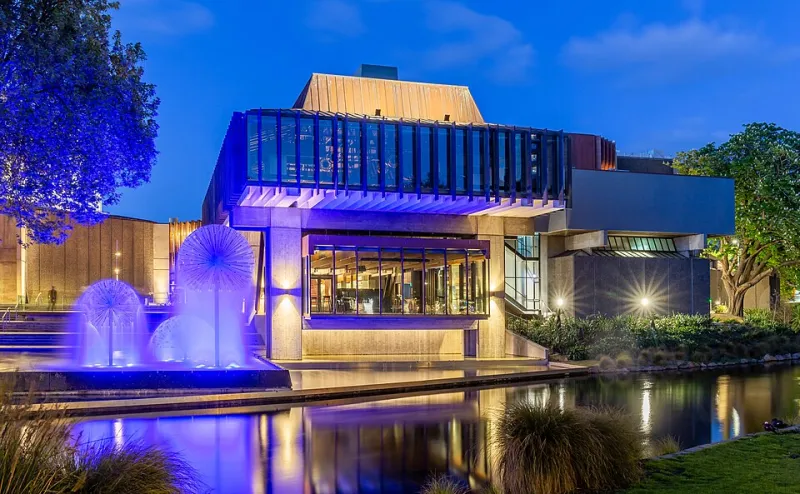
Photo: Mark Turin, Claire Wheeler and Eleanor Wilkinson (eds.) (2013), CC BY 3.0, via Wikimedia Commons
An archive is not a neutral object. It is a set of decisions — about what is worth keeping, who is worth remembering, and which voices deserve the permanence of the institutional record. For communities like Barrancos, those decisions have historically produced a particular kind of silence: not the silence of nothing happening, but the silence of deliberate exclusion, benign neglect, and structural indifference compounded across generations.
That silence is being challenged. Across the country, a growing network of archivists, community historians, and digital preservationists — many of them working outside traditional institutional frameworks — is developing new methods to document what official history has consistently refused to see. Their tools range from the deeply analog to the thoroughly digital, but they share a common premise: that community authority over the historical record is not a courtesy to be extended by institutions. It is a right to be exercised.
The Limits of the Official Record
To understand why alternative archival methods are necessary, it helps to understand precisely how the official record fails communities like Barrancos. The problem is not simply that certain records were never created — though that is part of it. It is that the systems designed to create and preserve records were built with specific communities in mind, and Barrancos was not among them.
Census records, for instance, frequently misrepresented or omitted members of small, marginalized communities. Property records reflected legal frameworks that excluded certain populations from formal ownership. Church records, where they exist, were maintained by institutions that did not always prioritize the documentation of every community member with equal care. The cumulative effect is a historical record that is not merely incomplete but structurally biased — one that reflects the priorities of those who held institutional power rather than the full texture of American community life.
"The archive doesn't just have gaps," notes one community historian who has spent more than a decade working with Barrancos families in the Southwest. "The gaps are the point. They tell you exactly who the archive was built for — and who it wasn't."
Oral History as Primary Source
Among the most significant methodological shifts in alternative archival practice is the elevation of oral history from supplementary material to primary source. For generations, oral testimony was treated by academic and institutional archivists as inherently less reliable than written documentation — a bias that conveniently devalued exactly the kind of evidence that communities without strong written traditions possessed in abundance.
That bias is now being actively contested. Community oral history projects affiliated with Barrancos heritage organizations have developed rigorous protocols for recording, transcribing, and contextualizing spoken testimony. Interviews are conducted in both English and the community's heritage language where applicable. Speakers are given the opportunity to review and annotate transcripts. Recordings are stored in multiple formats and locations to guard against loss.
What distinguishes these projects from earlier, more extractive models of oral history collection is the emphasis on community ownership. The recordings do not belong to a university library or a state historical society. They belong to the community that produced them — and decisions about access, use, and eventual disposition are made by community members, not institutional administrators.
This shift in ownership has practical as well as philosophical implications. When communities control their own oral archives, they can determine how those archives are used — whether in educational programs, legal proceedings, or public exhibitions. The archive becomes a resource rather than a relic.
Crowdsourcing the Record
Beyond oral history, Barrancos heritage organizations have been at the forefront of crowdsourced documentation initiatives that leverage the distributed knowledge of diaspora communities. The model is straightforward: community members are invited to contribute photographs, documents, artifacts, and written recollections to a shared digital repository. Contributions are catalogued, cross-referenced, and made searchable through platforms designed with community usability in mind.
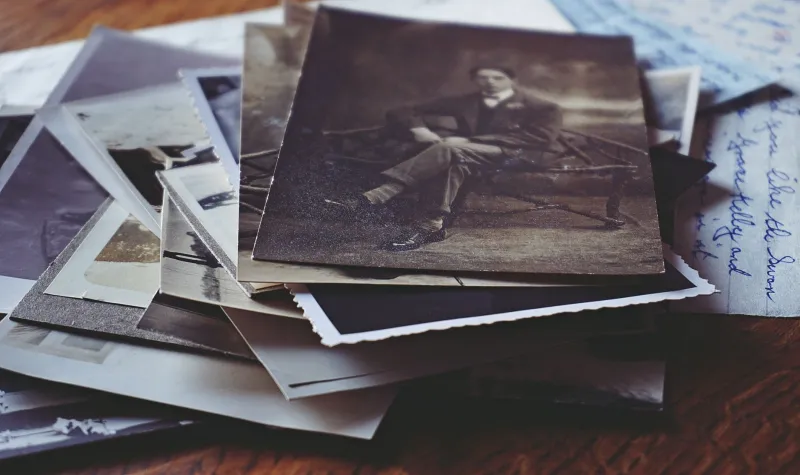
The results have been striking. Materials that would never have surfaced through traditional archival channels — personal letters, handmade maps, photographs of demolished structures, receipts and ledgers that document economic life — have been contributed by families who did not know their holdings were historically significant until they were invited to look.
"People have been sitting on this material for decades," says one digital preservationist who has helped design several community archive platforms. "They didn't think it was important because no one ever told them it was. The act of asking — of saying, your family's records matter — is itself a form of documentation."
The crowdsourced model also addresses one of the central structural challenges of community archiving: the dispersion of Barrancos descendants across wide geographic areas. Because contributions can be made digitally from anywhere, the archive is not limited by proximity. A family in New Mexico can contribute materials that complement records held by a cousin in Florida, creating connections that no single institutional archive would have been positioned to make.
The Question of Institutional Partnership
As alternative archives grow in scope and sophistication, they inevitably attract the attention of traditional institutions — universities, state libraries, and historical societies that see an opportunity to incorporate community-held materials into their own collections. This interest is not always unwelcome. Institutional partnerships can provide resources, technical expertise, and long-term preservation infrastructure that community organizations may lack.
But the terms of partnership matter enormously, and the history of institutional engagement with marginalized communities provides ample reason for caution. Too many previous collaborations have followed a pattern in which community materials were absorbed into institutional collections, community members were credited as contributors rather than recognized as authorities, and control over access and interpretation quietly shifted from community to institution.
The archivists and community leaders working in the Barrancos heritage space are acutely aware of this pattern — and are developing partnership frameworks designed to prevent its repetition. Formal agreements specify that community representatives retain veto power over how materials are used. Digitization projects are structured so that communities receive copies of all materials before any institutional transfer occurs. Intellectual property arrangements are negotiated explicitly rather than assumed.
"We're not opposed to working with institutions," explains one heritage organization director. "We're opposed to working with institutions on their terms. The conversation has to start with community authority, not institutional convenience."
Preservation as Political Act
The work of alternative archiving is not, ultimately, just about historical accuracy — though it is certainly about that. It is about power: the power to define what counts as evidence, whose memory counts as history, and which communities are entitled to the dignity of a documented existence.
For Barrancos descendants, the act of building and maintaining their own archives is inseparable from the broader project of cultural survival. Every interview recorded, every photograph digitized, every handwritten letter transcribed is an assertion that this community's story is worth preserving — not because an institution has decided so, but because the community itself has decided so.
That assertion, modest as it may seem, carries consequences that extend well beyond any single collection. It establishes a precedent: that communities have not only the right but the capacity to serve as the primary stewards of their own histories. And it offers a model that any community facing institutional erasure can adapt and apply.
The archive, in this vision, is not a building or a database. It is a practice — ongoing, collaborative, and fundamentally democratic. And it is being built, one contribution at a time, by people who have decided that invisibility is no longer acceptable.